


Shin splits is a familiar complication for athletes. It is often used for any type of pain felt in your lower leg. However, true shin splints occur in the front shin bone, usually because of inflammation. Shin splints can cause pain, swelling, redness and sometimes lumps or bumps. Although shin splits mainly is biomechanical issues like improper stepping or running on pavement, properly warming up and stretching prior to a workout helps reduce them from occurring.
Treatment
- Calf stretch
Stretching your gastrocnemius muscle, the largest muscle in your calf, may reduce shin splints. Stand facing a wall and step one foot in front of the other. Place your hands on the wall then lean forward, keeping the heel of your back foot flat on the floor. Hold the stretch up to 30 seconds, then release and repeat this on your other leg
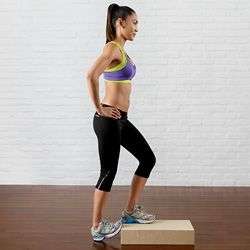
- Standing toe-up Achilles stretch
The standing toe-up Achilles stretch is an effective stretch for preventing and treating shin splints. Stand with one foot on a step and your other foot flat on the ground. Move your front foot backward so that just the ball of your foot is resting on the step. Place your hands on your hips for balance, bend your front knee and lean slightly forward. Hold the stretch for 30 seconds then release, and repeat it on the other foot
- Heel step-downs
Heel step-downs are an effective exercise for preventing shin splints. Start with your feet shoulder-width apart. Step your right foot forward and only touch your heel to the ground. Keep the ball of your foot about an inch off the floor. Return your foot back to your starting position. Perform 15 repetitions of this exercise on each foot
- Thera-band exercise
This exercise requires the use of a Thera-Band, which can be purchased in most sporting goods stores. Sit on the floor with your legs about hip-width apart. Loop the end of the Thera-Band around the ball of your foot. Hold both ends of the Thera-Band in your hands. Flex your foot and rotate your ankle in a clockwise direction then in a counterclockwise direction. Perform 15 rotations in each direction
- Double toe lifts
Stand about the length of your feet away from a wall with your back to it. With your body straight, let your shoulders fall back into the wall. Lift your toes up in the air, hold for a second then lower them back down. Perform 10 to 12 reps total
- Single toe lifts
Single toe lifts can also be done which can add more resistance. Start in the same body position as double toe lifts, with your shoulders against the wall. Pick up your left foot and place it flat against the wall. Lift your right toes up, hold for a second and lower them back. Do 10 to 12 reps and switch sides
- Heel walks
To do heel walks, lift your toes off the ground so all your weight is on your heels. Take 10 to 12 steps across the room, turn around and come back. When you walk, stop the upper part of your foot from contacting the ground by contracting your tibialis anterior muscles, which are located on the front of the shins. Once you get used to this, increase your stride length to be more challenging. If you want even more resistance, carry some dumb-bells in your hands


