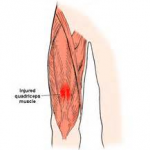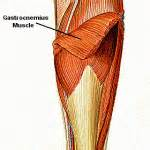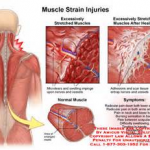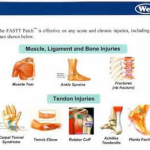
Muscle strains are torn muscle fibers (micro-damage to fiber). Also known as pulled muscles or torn muscles.
Muscle injuries can be painfully debilitating. Yet, muscle strains can fully heal with the conventional RICE (rest, ice, compression, elevation) technique. Expediting healing starts with stabilizing swelling and pain. Rest and elevation helps improve circulation and further aggravation. Rest helps the self-healing process with muscle repair.
A muscle strain injury is graded one to three. A sore muscle is usually a grade one, slower flexibility and discomfort because of stiffness.
Treatment of sore muscles after exercise is reducing inflammation and giving adequate rest-time for muscle repair. Ice therapy should be applied for better circulation, simultaneously compression therapy helps reduce any swelling. A wrap or brace is a useful technique for exercising to help stability and circulation. The wrap should surround the injury at least two inches of support. Ice is done 20 to 30 minutes, every two hours. Strengthening, stretching, and RICE consistently helps muscle flexibility and reduce soreness. Without interruption to regular active lifestyle.
Warm temperature therapy helps relax stiff muscle, and balance flexibility without soreness when stretching. Heat application before exercise moderates the muscle by loosening.
Sore muscles is sudden intensity transgressing the body’s capacity. Extension exercises from downhill motion or hard recoiling range-of-motion (ROM), like the legs and arms. Also relative is delayed onset muscle soreness (DOMS) that occurs from 24 to 48 hours after exercise. The discomfort usually feels like a spasm, if the injury is a delayed onset to the muscle. Stabilizing pain and any inflammation within 10 days is manageable.
Weight training exercises should alternated for the muscle to rest. Cardio exercises, like running or biking, can be done uninterrupted if there is not pain. And therapy is performed before and after exercising.
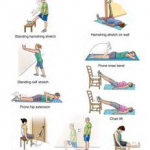
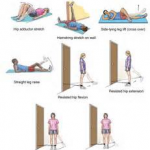
Muscle strengthening is crucial to help maintain regular flexibility and ROM. It keeps the muscle loose before and after activity. Relative strengthening exercises for sore muscles are
- for the back (lower back stretch, pelvic tilt, cobra to down-dog)
- for the neck (shoulder rolls, trapezius stretch)
- for the thigh (quadriceps and hamstring stretch, single leg squat)