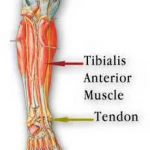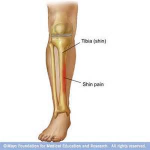
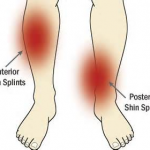
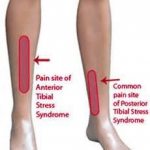
Your shin splints muscles are overworked and tendons in the lower leg begin pull on the tibia bone along the shin and the connective tissues around the bone.
Shin splints cause dull, aching pain in the front of the lower leg. It is felt during exercise, and after exercising. Sometimes the pain is constant.
Shin splints is manageable with rest and simple remedies.
Home remedies
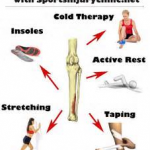
Icing the injured shins relieves pain and helps self-healing. Ice therapy is 15-minutes, four to eight times daily, until the shins do not hurt. Reduce swelling and elevate your lower legs. Elevate the legs while sleeping at least two nights.
Prevention
Replace worn out running shoes, and add newer insoles or arch supports to be more comfortable. Avoid long-distance running on asphalt or pavement. Alternate high-impact exercises and low-impact exercises. Regularly stretch lower leg muscles, including the calf muscles at the back of the leg and the tibialis anterior at the front. To increase range-of-motion (ROM) and improve hamstring flexibility. Also strengthen the calf muscles with ‘toe raises’, to help withstand more impact and stress.
What is recovery time for shin splints? Three to six months for a complete recovery is common with shin splints.
Your shin splints are healed when
- the injured leg is flexible as your other leg
- the injured leg feels strong as your other leg
- you can jog, sprint, and jump without pain
- X-rays are normal, because stress fractures have healed
In rare cases, surgery is needed for severe stress fractures and malaise that is not easily detectable.
Regularly using the conventional RICE (rest, ice, compression, rest) technique helps rehabilitation of shin splints. Ice the shin splints before and after exercise.
Compression therapy helps inflammation and improve circulation, specially worn during activity. A wrap or brace support should be at least two inches of support.