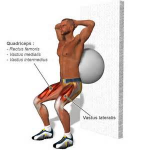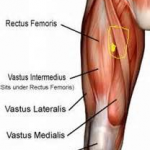
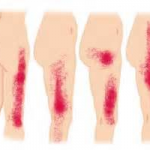
The quadriceps muscles are the
- vastus lateralis
- vastus medialis
- vastus intermedius
- rectus femoris
A quadriceps muscle tear is on the quadriceps muscles at the front thigh. It ranges from a mild discomfort to a severe muscle tear. A quadriceps strain is graded one to three.
Grade two symptom is more severe pain when attempting physical activity. Pain causing limping and swelling or mild bruising is noticeable. Knee range-of-motion (ROM) against resistance is likely painful, loss of bending or knee motion.
Grade three is sudden, severe pain in the thigh. Walking without support is relative. Bad swelling appearing immediately with bruising. A static contraction is painful and can produce a bulge deformity. Six to 12 weeks of recovery, usually after surgery. The most common muscle tear is to the Rectus femoris. Because it is the only one of the four muscles that crosses the hip and knee joints.
Initial treatment usually is the conventional RICE technique to stabilize swelling and inflammation. Specially ice and compression. Ice for 20 minutes, every two hours, up to three days. Compression and elevation counters the swelling and helps circulation, commonly a wrap or brace should add two inches of support around the quadriceps injury. Rest and elevation or still subtleties to progress to stretching and strengthening rehabilitation.
Injuries collateral to strained quadriceps commonly are knee and hip strain, which require different treatment.
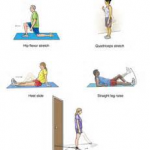
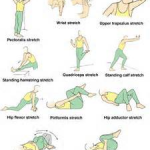
What is important is RICE is being applied consistently to help with inflammation and swelling, so that the quadriceps muscle ROM and flexibility are healthier and self-healing. Afterward ROM exercises are helpful for regular muscle flexibility, like
- stretching exercises
- static contraction exercises
- resistance band exercises
- plyometric exercises
- straight leg raises
- leg extensions
- Arabesque
Only attempt rehabilitation exercises when pain completely subsides.