


The piriformis is a small muscle deep within the hip and buttocks region. It connects the sacrum (lower region of the spine) to the top of the femur (thigh bone) and assists external rotation (turning out) of the hip joint.
Piriformis syndrome is the piriformis muscle tightening or spasming, and it irritates the sciatic nerve.
The pain is in the buttocks region and can result in referred pain in the lower back and thigh. Consequential is deep pain within the hip and buttocks, thus the piriformis syndrome is also referred as “Deep Buttock” syndrome.
Symptoms of a piriformis syndrome
- pain (or a dull ache) is the most common and initial symptom associated with piriformis syndrome
- the pain is usually profoundly within the hip and buttocks region, but also from the lower back to the lower leg
- weakness, stiffness and restriction of movement are common
- even tingling and numbness in the legs
Causal of the piriformis syndrome
Piriformis syndrome is predominantly a shortening or tightening of the piriformis muscle, typically it is categorized into two main groups: overload (or training errors) and biomechanical inefficiencies.
Overload (or training errors): piriformis syndrome is regularly associated with high-intensity sports like running, change of direction or weight bearing activity. A majority of injuries are relative to a sedentary lifestyle. Other causes are
- exercising on hard surfaces
- exercising on uneven ground
- beginning an exercise program after a long lay-off period
- increasing exercise intensity or duration hastily
- exercising in fray fitting shoes
- sedentary for long durations
Biomechanical inefficiencies: primarily the piriformis syndrome is incorrect foot and body mechanics, gait disturbances and poor posture or sitting habits. Other causes are spinal related like herniated discs and spinal stenosis. Other biomechanical defects are:
- poor running or walking mechanics
- tight, stiff muscles in the lower back, hips and buttocks
- running or walking with your toes pointed out
Initial treatment for the piriformis syndrome
There is soft tissue injury of the piriformis muscle, therefore it should be treated like a common soft tissue injury. Immediately following an injury apply the conventional RICE (rest, ice, compression, elevation) technique. RICE is used for at least three days, appropriately rendered RICE helps to a complete recovery.
After the third day physiotherapy techniques should be applied.
Heat and massage is an effective treatment for removing scar tissue and expediting self-healing of the muscles and tendons.
When the pain subsides sequence to physiotherapy rehabilitation. It is to regain strength, power, endurance and flexibility of the injured muscles and tendons.
Stretching exercises are important in rehabilitating the piriformis syndrome. The piriformis muscle should be stretched daily, as should the groin and other buttock muscles.
Stretches
Outer hip stretch
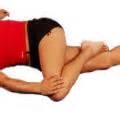
- to stretch the muscles that rotate the hip outwards
- lie on your back and bend the knee of the leg to be stretched
- use the opposite hand to pull the knee over to the opposite side
- the impact should be felt in the hip and buttocks
- hold stretch for 30 seconds, repeat three to five times and stretch thrice daily
Piriformis stretch

- lay on your back and bend both knees with feet flat on the floor
- place the outer foot of the leg you wish to stretch on the lower thigh/knee of the other leg
- grip behind the thigh and pull this knee towards your chest
- you should feel the impact in the buttock
- hold this position for 30 seconds, repeat three-five times and stretch thrice daily
Groin stretch
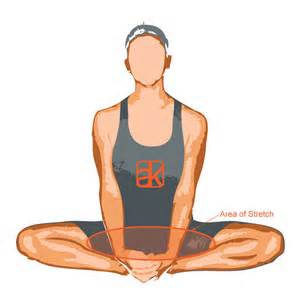
It is important to stretch the long aductor muscles starting at the knee as well as the short adductor muscles, which attach above the knee.
- long adductor muscles need to be stretched with a straight leg
- it can be done either sitting or standing
- short adductor muscles are stretched with the knees bent


