Conditioning of the lower body muscles is automatic and constant as you walk. A walker should supplement a walking program with calisthenics, weight training, and other activities to build strength. To maintain flexibility, that requires stretches for a functional walking routine.
Walking can help you maintain yourself nimble. To burn fat without losing muscle or depriving the body of essential nutrients. It helps condition muscles and define the legs without high-exertion physical activity.
Two basic preliminaries to consider for a freestyle walking program are age and overall health. Also to measure heart rate and understand how to intensify fitness appropriately.
Common walking and running injuries are
- runner’s knee (patellofemoral pain syndrome)
- Iliotibal (IT-band) syndrome
- shin splints (medial tibial stress syndrome)
- stress fracture
- plantar fasciitis
- hamstring strain
- Achilles tendinopathy
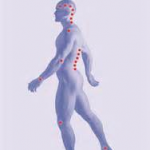
A new discomfort sensation of twinges and throbs, is usually a first indicator of a walking injury.
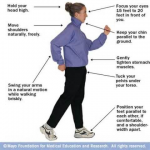
Pain most of the time is caused by improper walking technique and shoes. Also hard surfaces and over-exercising. Common walker’s injuries are lower leg mostly ankle, feet, and the shin.
Which is why the most basic muscle strengthening exercises for the feet, legs, and abdomen really help flexibility throughout the body. If done consistently, or throughout physiotherapy rehabilitation.
Initial treatment for a walking injury is the conventional RICE (rest, ice, compression, elevation) technique to stabilize any swelling and inflammation. Ice the lower-leg injury, 20 to 30 minutes every two hours, up to three days. Temperature therapy is important to maintain flexibility, and warmer therapy relaxes the muscle and helps range-of-motion (ROM). Rest and elevation are still important subtleties, that help circulation.
Common foot and walking injuries are
- the toes
- corns
- ingrown toenails
- bunions
- hammertoes
Rest and ice are important in initial treatment, sudden pain after long-term activity routine indicates a gradual injury. The three most common strengthening exercises relative to walking injury prevention are
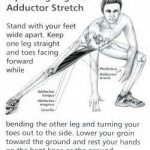
- squatting leg-out adductor stretch
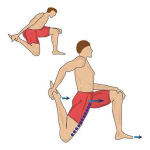
- kneeling quad stretch
- standing toe-up Achilles stretch